Week 4
BRAIN DUMP:
This week, I felt a great sense of relief as I finally got my assignment out of the way. The experience of listening to my peers' presentations was particularly enjoyable, as it reassured me that I am on the right track with my work.
I am now awaiting the feedback on my assignment, especially regarding my presentation, as we unfortunately ran out of time to receive this feedback during class. My immediate priority is to decide which of my proposed plans I should focus on first, and this decision largely depends on the feedback I receive.
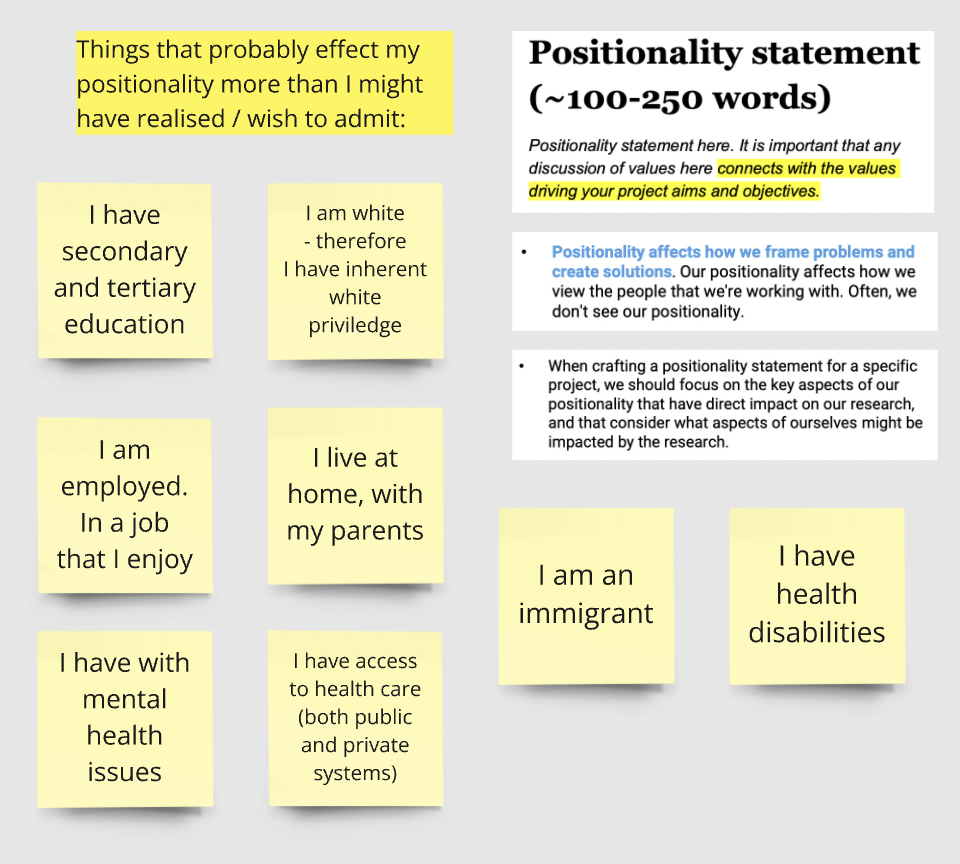
I also want to dedicate more time to fleshing out my positionality. The more I think about it, the more I realise how complex it is. I want to get this right, not only for my project but also for a deeper understanding of myself.
Overall, I am feeling more calm about my progress. There is still a lot to be done, but after the presentations, I feel reassured that I am making good design decisions so far.
Additionally, I have been getting to know my peers better by chatting with them between classes. This has had a positive impact on my ability to discuss my ideas and understand the assignments. Overall, I feel a lot less alone, which has been really nice.
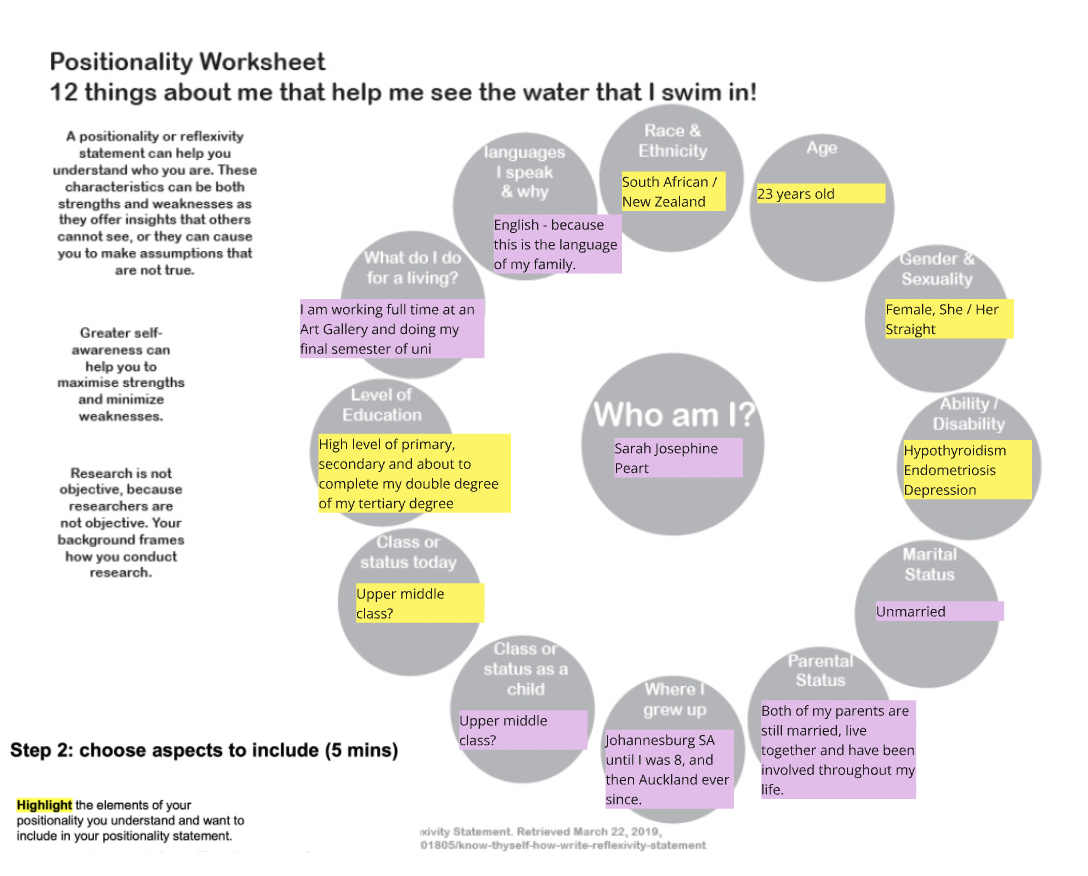
Further exploring my positionality:
I really enjoyed exploring the wheel of privilege last week and wanted to spend a little longer on this after class. I worked through some exercises to further understand about how my positionality is going to always impact the way I design - both positive and negative. I am going to ask for my feedback on this work in class for 302 next week.
MIRO OVERVIEW:
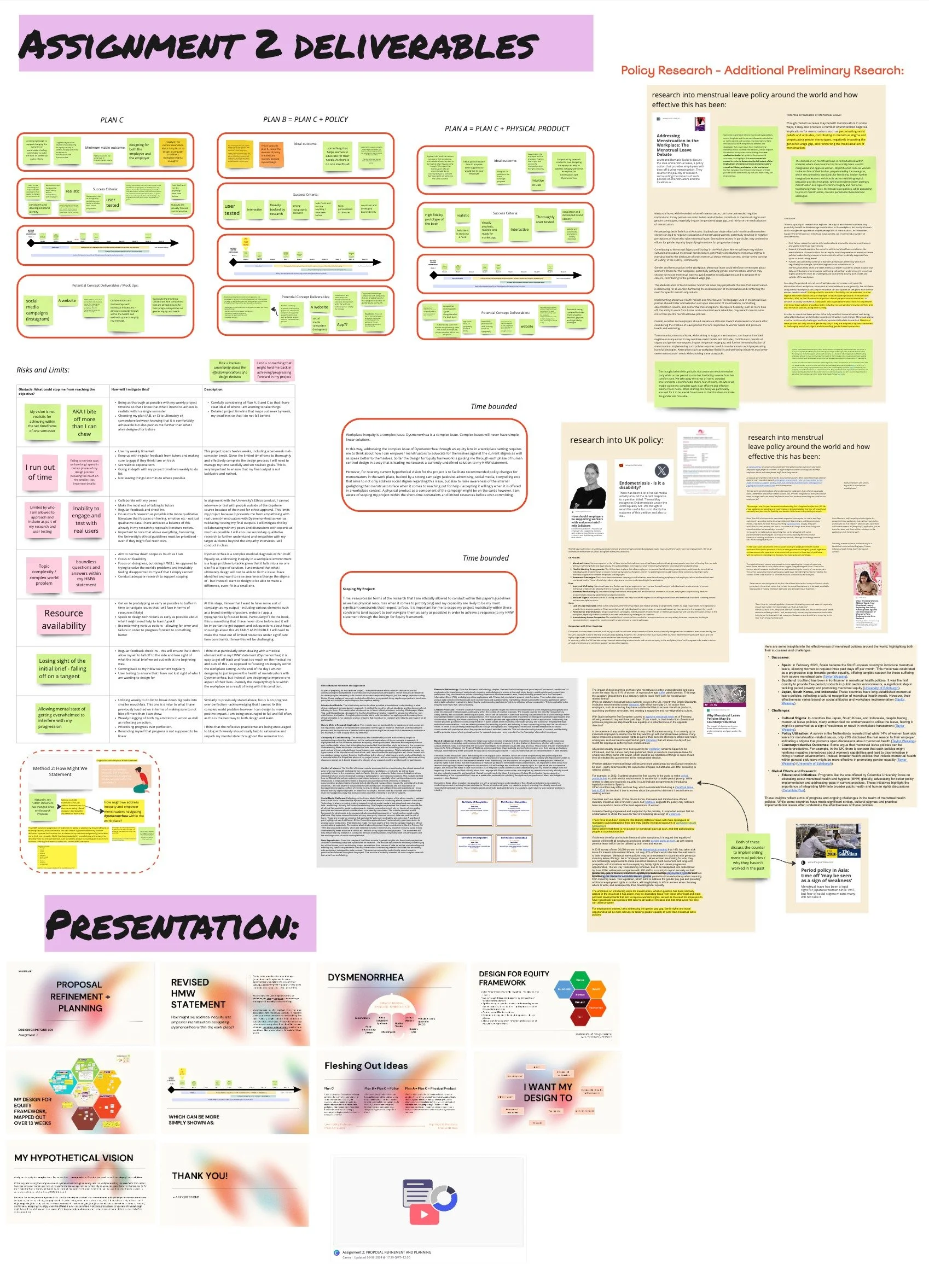
This week was primarily about organising my work into the required deliverables format for the assignment. A lot of my time was spent on distinctly having a Plan A, Plan B and a Plan C.
THE CARL MODEL REFLECTION TOOL:
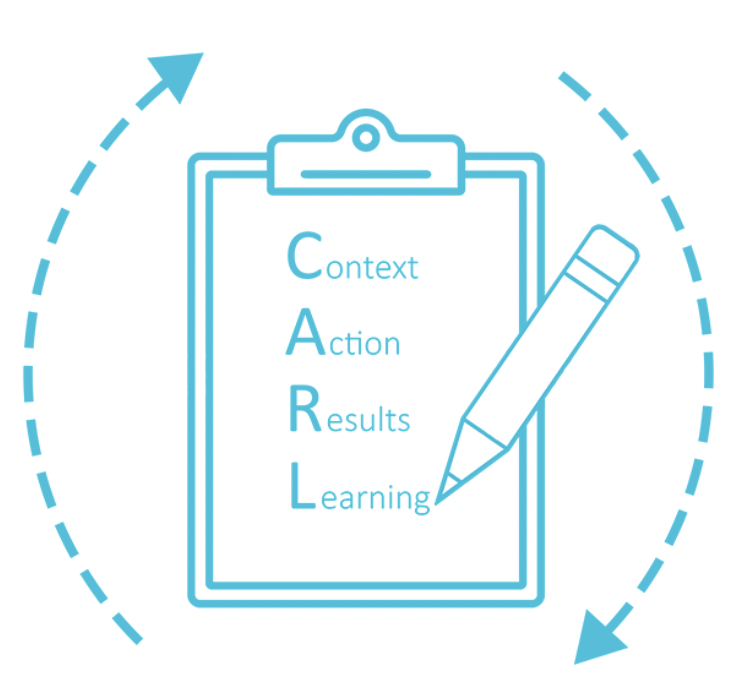
The CARL model is adapted from a job interview technique where you structure each of your answers according to the different aspect of the model. Given the reflective nature of successfully answering many job interview questions, this model can easily be used in general to guide your reflective process on experiences. CARL stands for:
Context: Briefly describe the context of you experience
Action: Explain what actions you took
Results: Explain what happened as a result of your actions
Learning: Identify what you have learned
Context:
I conducted my first empathy interview in class on Tuesday with one of my peers.
I pushed back on conducting this last week as I wanted to just take the extra time to make sure that I understood the ethics of how I must do it properly. I am glad I took this extra time, so that I could rethink my approach to how I wanted to conduct the conversation.
The empathy interview went well, I definitely gained insight from it and liked the way that it felt like a peer-to-peer discussion, as opposed to a formalised interview. I think that the answers I received from them are more authentic as a result of this.
One thing I wanted to discuss was when talking about having the courage to mention their diagnosis to their employer, this was something that they simply did not want to do. I understood there was a level of anxiety about doing this however, their main reason was because they identified as non-binary and therefore did not want gender assumed on them, simply because they menstruated. This is something that I had never considered and stopped me in my thoughts. I am really glad we had this conversation because otherwise I would never have considered those in this perspective.
Action:
In response, I said to them that in all honesty, I had never considered this to be a reason and that I was really glad they shared this with me.
I also tried to empathise and iterate that I can only imagine how difficult this situation must be to navigate when faced with this severe pain, month upon month.
Results:
As a result, I want to make sure that in my ideation phase, this user perspective is accounted for in some way.
I understand that case by case is so different however, I would like to do my best to make my design as equitable as possible.
Learning:
To assume anything related to gender and identity in today's day and age is no longer appropriate and can come across as insensitive - even if it is with the best intention.
I need to constantly be aware of my positionality and the inherent bias this creates, as this might lead me to assume things that cannot be assumed, simply because of who I am and the life I have lived. I want to learn how to design in a way that is not a reflection of my positionality - as this would mean I am not designing for equity.